
What survives
When Fragments and Objects Carry Stories Through Time

The bones were light in my hands. Their ivory surface was smooth from years of use, curved just so that the ends pointed upward, forming a narrow V—like the first cursive letter of a hurried note. A claw to dig deep and place a seed far into the earth, where it can sprout in safety. With care and water, it slowly makes its way upward, storing all the light before it ever reaches the surface, perhaps becoming a bright orange carrot without having seen the sun.
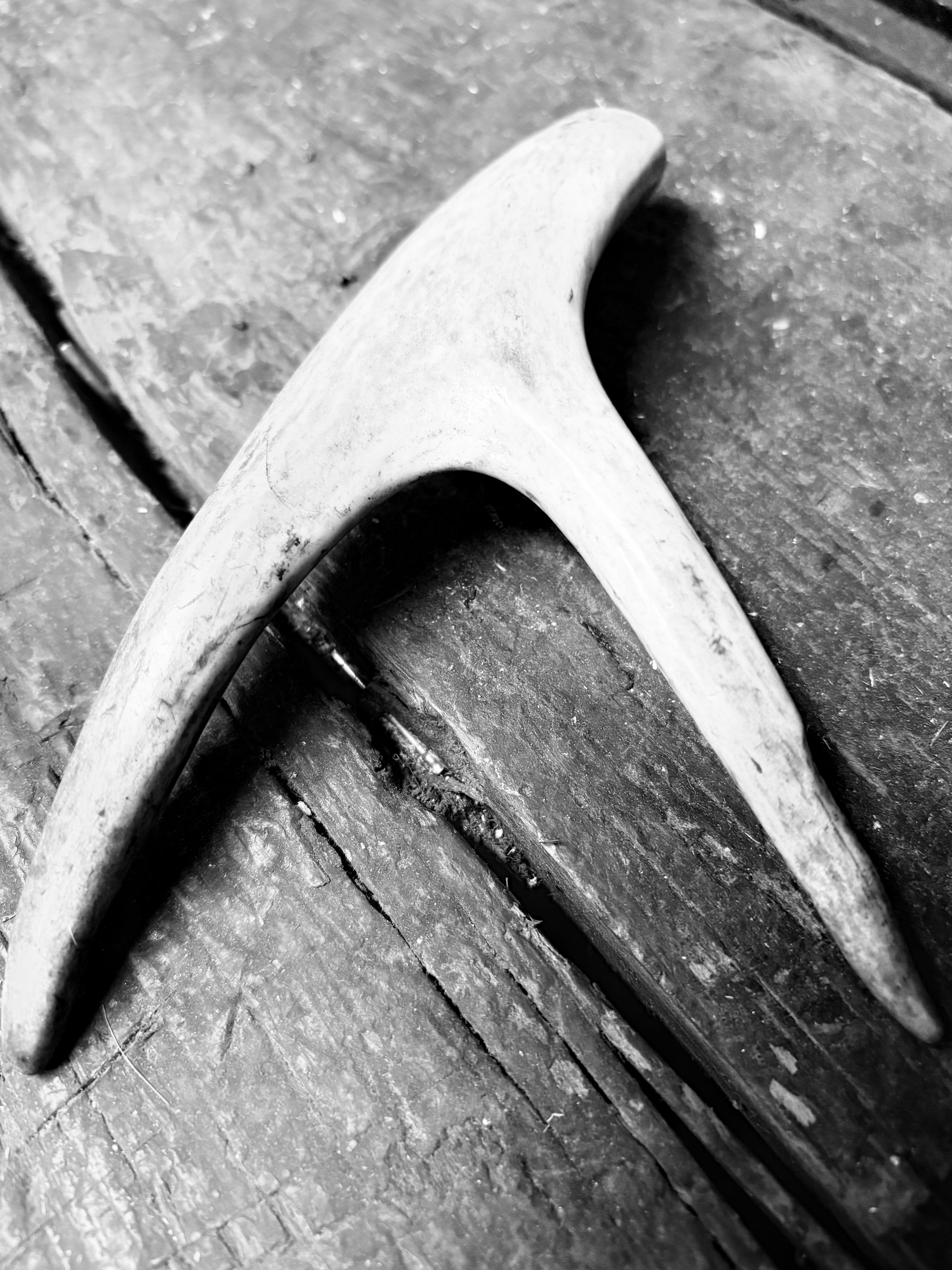
In recent years, objects like these have taught me how to listen. Last week, fifteen students gathered for my writing class in Smoke’s barn to learn the same thing: how to look more closely, how to become archaeologists of a story, how to wait until an artifact reveals itself before assigning meaning. How to pause.
Once meaning is given, a story can open. These bones helped me understand Smoke’s world while writing Hush of the Land. They became seeds of the story itself. I remember the ease with which Smoke once used the end of a deer antler to lift a leather strap pulled too tight—a gift from the natural world, turned into a precise and necessary tool.
Most stories are buried. Even when letters, journals, or documents survive, only the privileged had the time, literacy, and safety to create and preserve them. If we are lucky, people can still tell their stories aloud, as Smoke did. But without the patience and opportunity to sit, to listen, to stay, much of what matters disappears. What remains is often fragmentary, tinkered with—an instinct that a story exists at all.
Sometimes objects are all that survive from a life. And when they do, they carry a kind of urgency. That has been my experience with the book I have been writing for the past few years: the story of Georg Elser, an artisan and largely forgotten German resistance fighter who, in 1939, came closer than anyone else to killing Adolf Hitler and stopping the Second World War before it began. I grew up in Germany and never learned about him until an old cowboy in a barn in Montana leaned over and whispered his name. My search took me to more than thirty archives in six countries, yet even the most revealing documents—written in four languages—could not offer what objects can.
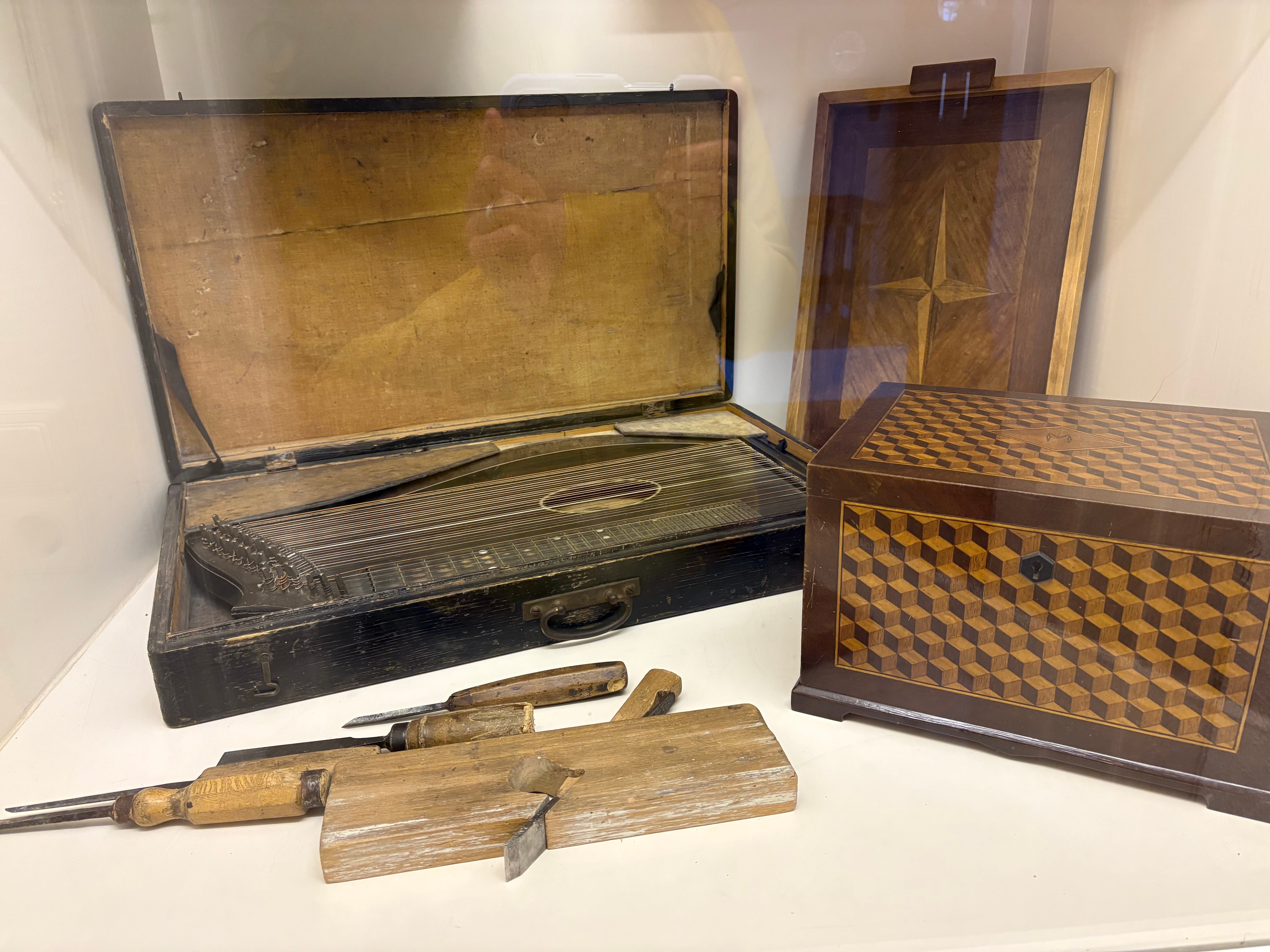
Elser left no journal. Most of the letters and postcards he wrote to his family were taken by the Nazis and later destroyed by war. His story is buried beneath lies and convenient conspiracy. What remains is what he made with his hands: a jewelry box carved for a lover, a workbench built for his brother, a clock, a zither he played in the evenings, even a replica of the bomb he built in an attempt to save millions. Each object becomes a trace, a form of testimony. Once you begin to look, each one speaks of love, family, craft, and conviction in ways no letter ever fully could.
As I write this, I find myself wondering what will remain of us fifty years from now. What objects might tell my children something true about the time we lived in—beyond screens, archives, and the permanent noise of the present. I think about my journals, my saddle, a stone carried back from Morocco’s Atlas Mountains, my favorite coffee cup stained from years of use. Perhaps no one will notice.
But I have learned this much: what survives matters. Objects remember what language cannot. History does not resolve chaos, but it can offer orientation—an invitation to place one’s hands on something solid, an ending we already know, when the present feels unsteady. This is where I find myself now: watching closely, mapping what is being left behind and what insists on being told.
I’ll keep sharing pieces from inside this work, how it has helped me navigate the present, and what it takes to reconstruct a life too many tried to erase. To show the stitches. To stay with what was buried long enough for it to surface on its own. Because forgetting is never accidental, and recognizing what survives is the most permanent form of resistance.
Bis bald,
Eva
P.S. If you want to learn more about my new book project, join us!
Upcoming events
February 6, 2026, 5-8pm, OpenAir Artist Exhibition Opening Night, Bob’s Your Uncle Gallery, Missoula, MT:

February 27, 2026, 5-7pm, live reading at MT OTHERWISE: Annual Group Exhibiting Closing Reception, Bob’s Your Uncle Gallery, Missoula, MT
Lovely Eva! Just lovely.